


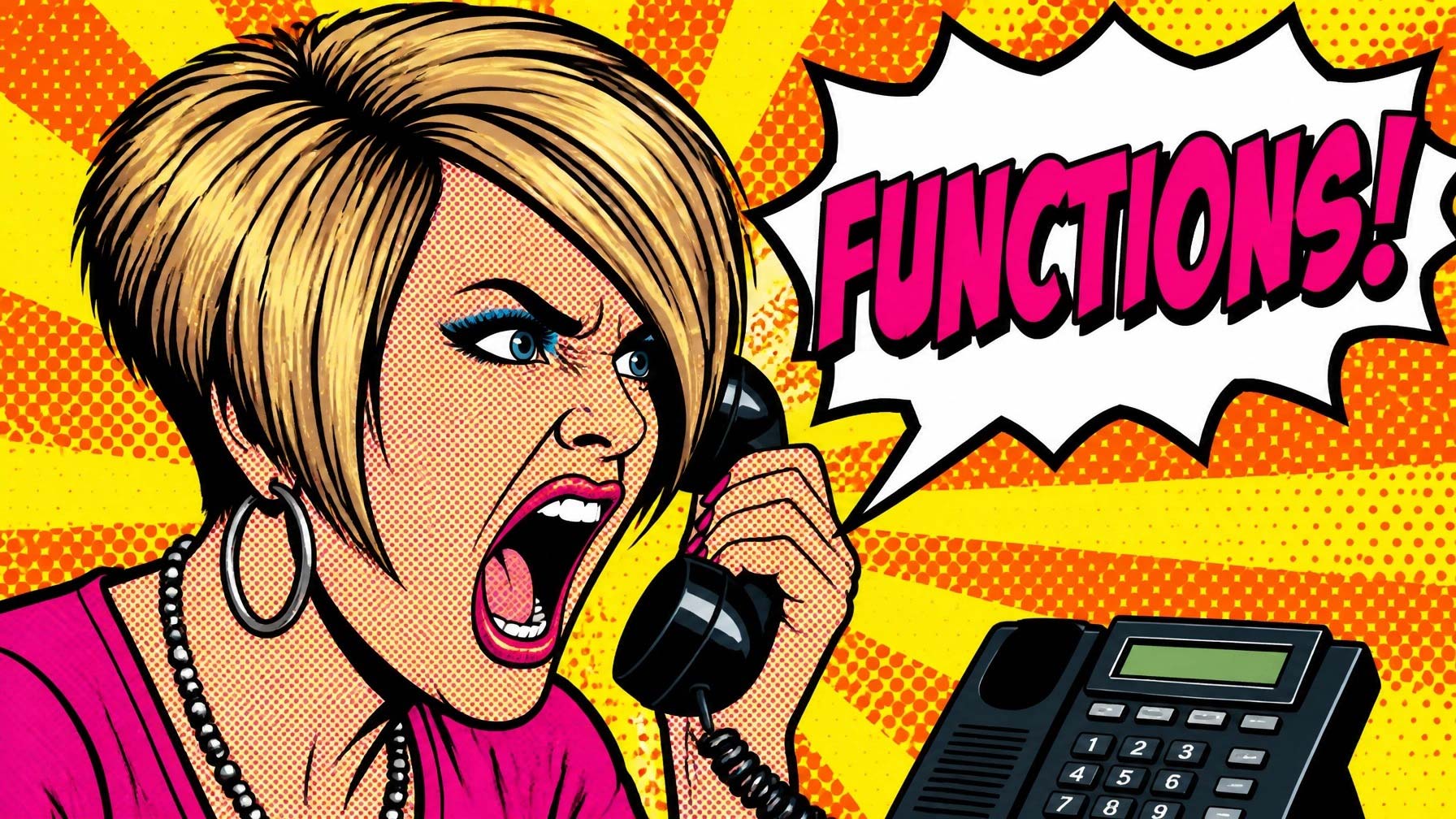
What can viral “Karen” videos teach us about the functions of behavior? Everything. Discover how pop culture makes the core pillars of behavior analysis stick in our latest PDU course.
We’ve all seen the videos.
The shaky camera work: the finger-pointing: the inevitable demand to “speak to the manager.” The “Karen” archetype has become a staple of internet culture, fueling endless memes and comment-sec-tion debates.
But while the rest of the world sees a “difficult person,” behavior analysts see something else entirely. They see a masterclass in the functions of behavior.
In Applied Behavior Analysis (ABA), we don’t care about the labels. We don’t care about the personal-ity types. We care about the why. Every scream, every demand, and every eye-roll serves a purpose for the person doing it.
If you want to master behavior analysis, you have to stop looking at the person and start looking at the payoff.
The “Why” Behind the Outrage
When a behavior occurs: whether it’s a toddler’s tantrum or a viral retail meltdown: it isn’t happening in a vacuum. It’s a form of communication.
In the ABA world, we break this down into the four functions of behavior.
Think of them as the universal remote for human interaction. Once you understand which button is being pressed, you can change the channel. At Outside the Box Trainings, we use the SEAT acronym: Sensory, Escape, Attention, and Tangible.
Let’s break down how “The Karen” helps us visualize these ABA functions in the real world.
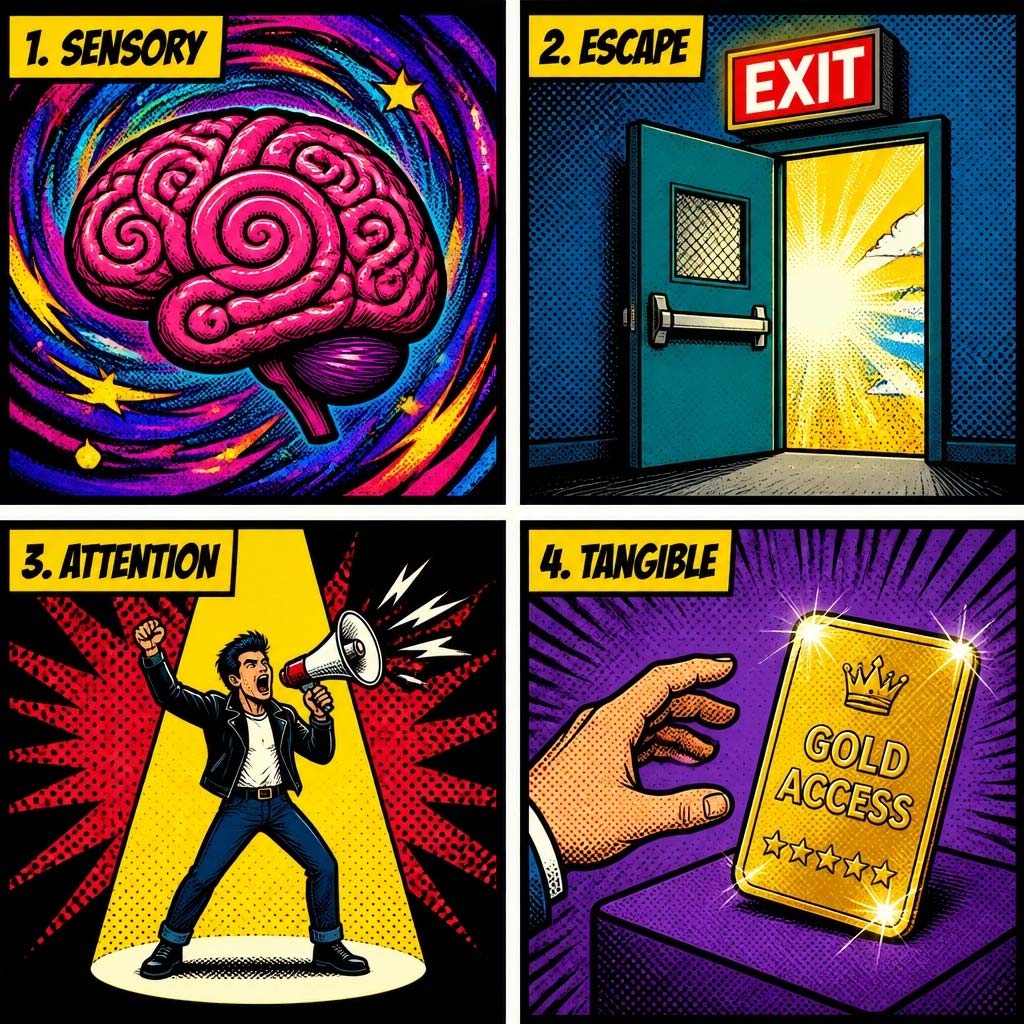
1. Sensory (Automatic Reinforcement)
This is the behavior that feels “good” (or provides relief) on the inside. It doesn’t need an audience.
Imagine a “Karen” who starts pacing or tapping her nails aggressively on the counter while waiting for a refund. No one is watching yet, but the action helps her vent internal frustration.
In our 40-hour Behavior Technician Certification Course, we teach you that sensory behaviors are maintained by the internal sensation: not the social reaction.
2. Escape (Avoidance)
This is the “Get me out of here” function.
A “Karen” might start a confrontation to get out of following a store policy she doesn’t like or to avoid waiting in a long line. If the staff waives the rule just to make her go away, she has successfully escaped the demand.
She wins. The behavior is reinforced. And next time? She’ll do it again, even louder.
3. Attention
This is the classic “Look at me” function.
Social media is the ultimate attention machine. When someone films themselves arguing in a grocery store, they aren’t just performing for the manager: they’re performing for the millions of viewers they hope will watch, like, and comment.
Negative attention is still attention. For many, a manager’s scolding or a crowd’s staring is the exact payoff they’re looking for. It confirms they are being heard.
4. Tangible
The “Give it to me” function.
This is arguably the most common “Karen” payoff. The free meal: the discount code: the “complimen-tary” upgrade. When a behavior is maintained by access to tangibles, the person will keep escalating until the item is in their hand.
Once that manager hands over the coupon, the behavior has been bought and paid for.
Want a guided path instead of studying alone? The Blueprint is our live cohort : small groups, live sessions, and an AI study partner that keeps you on track. Applications are open now. Learn about the Blueprint.
Making ABA Concepts Click (No Textbooks Required)
Why do we use these pop-culture examples? Because “real-life sessions” aren’t found in a dry, 1990s textbook.
As a professional, your job is often to explain these functions of behavior to parents, caregivers, and teachers who are exhausted. If you walk into a home and start talking about “positive reinforcement schedules” and “motivating operations,” you’ll see their eyes glaze over.
But if you talk about the “Karen” at the grocery store? They get it instantly. Relatability is a clinical tool.
When we can map complex behavior analysis onto the things people see on their TikTok feeds every day, the science becomes accessible. It becomes useful. It moves from theory to practice.
Beyond the Meme: The Ethical Reality
While the “Karen” archetype is a great teaching tool, we also have to look at the ethics of how we cat-egorize behavior.
In our The Karen Phenomenon course, we don’t just laugh at viral clips. We dive into the nuance. We look at how cultural backgrounds, systemic issues, and personal histories can influence how be-havior is perceived.
Is it a “Karen,” or is it someone with a genuine communication deficit? Is it “difficult behavior,” or is it a survival strategy?
True behavior analysis requires us to be objective: even when the behavior is loud, colorful, and trending on X (Twitter).
Spotlight: The Karen Phenomenon Course
Ready to take a deeper dive into the four functions of behavior?
Our PDU Library features “The Karen Phenomenon“: a course specifically designed to bridge the gap between pop culture and clinical excellence. We use the most viral moments of the last few years to teach you how to identify functions in high-stress, real-world environments.
No boring slides. No monotone lectures. Just high-energy, behavior-based learning that you can ac-tually use in your next session.
Whether you’re an RBT looking for your next PDU or a BCBA wanting a fresh way to train your staff, this course delivers the goods.
Stop analyzing the label. Start analyzing the function.
Ready to Upgrade Your Skills?
Don’t settle for “checkbox” learning. Join the community that’s making ABA education modern, cul-turally responsive, and actually fun.
Register for the 40-Hour Training | Take the Karen Phenomenon Course | Join the Next Cohort