


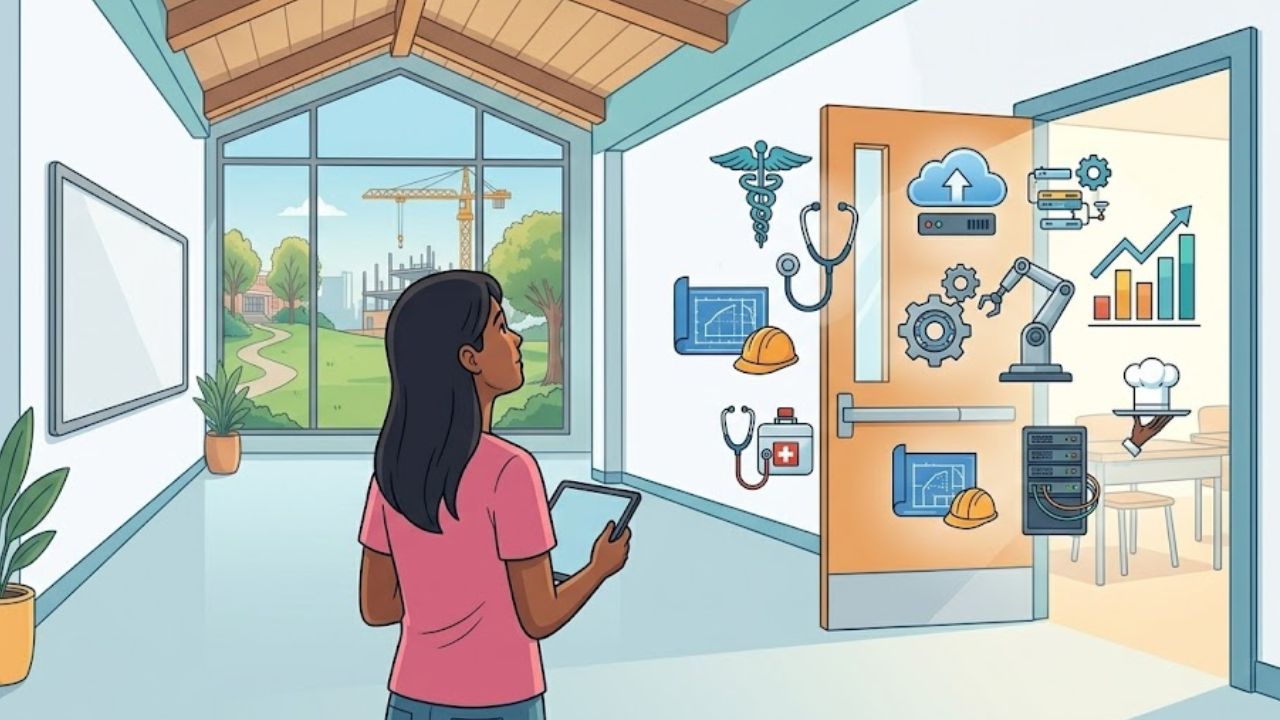
Most career pathway programs hand seniors a brochure and a guidance counselor’s phone number. Behavior technician certification training hands them something different: a real, employer-recognized credential they can walk across the graduation stage with — and a job offer waiting on the other side.
This guide is for high school administrators, counselors, and CTE coordinators evaluating whether a behavioral health certification pathway belongs in next year’s senior curriculum.
Quick Answer
High schools can introduce behavior technician certification training as a senior-year career pathway by partnering with an approved 40-hour training provider. Students complete the same training adults use to enter the field — covering ABA fundamentals aligned to the RBT®, ABAT®, or IBT® task list — and graduate eligible to sit for a nationally or internationally recognized certification exam. No college degree is required to start working in the field afterward.
Why Behavioral Health Belongs in Your Career Pathway Lineup
Districts are under constant pressure to prove their career and technical education (CTE) offerings lead somewhere real. Behavioral health solves that problem in a way few other pathways can:
- The credential is portable and in demand. RBT®, ABAT®, and IBT® are recognized by ABA agencies, schools, and clinics actively hiring technicians — not a certificate that only means something on a transcript.
- The training timeline fits a school year. At 40 hours, the program fits inside an elective block, after-school cohort, or CTE rotation without restructuring your whole schedule.
- It opens a real career ladder. Behavior technician work is a documented entry point into ABA, school psychology, special education, and clinical behavioral health roles — fields with long-term growth.
- It serves students who don’t see “more school” as the next step. For seniors not headed straight to a four-year degree, this is a credential-to-paycheck pathway, not just a resume line.
What the Training Actually Covers
Students train using the same curriculum working professionals use to become certified behavior technicians. The training is built around three credential pathways, so your district can align the program to whichever credentialing body fits your state or region:
| Credential | Full Name | Credentialing Body |
| RBT® | Registered Behavior Technician | BACB |
| ABAT® | Applied Behavior Analysis Technician | QABA |
| IBT® | International Behavior Therapist | IBAO |
Each pathway runs 40 hours across 10 modules, covering the core technician task list, plus a built-in mock exam so students walk into certification testing prepared rather than guessing. Delivered through The Behavior Technician Mixtape — available in both self-paced and cohort formats to flex around a school’s schedule.
How Districts Typically Roll This Out
- Choose a credential pathway (or offer more than one) based on what’s most recognized by employers in your region.
- Decide on a format — a dedicated elective period, an after-school cohort, or a hybrid self-paced model supervised by a faculty sponsor.
- Enroll your senior class in bulk through a group training purchase, rather than managing individual sign-ups.
- Build in exam prep using a mock exam, so students get a realistic readiness check before sitting for certification.
- Connect graduates to local employers — ABA agencies and clinics in your area are often actively hiring and open to partnering directly with schools.
Because this is a group rollout, we offer bulk training purchases built for exactly this use case — one purchase covering your entire senior class instead of per-student transactions.
Common Questions From School Administrators
Do students need any background in psychology or healthcare to start?
No. The training is built to take students with no prior background and walk them through everything needed to sit for a behavior technician certification exam.
Can this fit inside an existing CTE or elective structure?
Yes. At 40 hours total, the program is designed to fit inside a semester-long elective, an after-school cohort, or a hybrid model, depending on what works for your schedule.
Is the certification recognized by employers, not just academically?
Yes. RBT®, ABAT®, and IBT® are credentials issued by independent credentialing bodies (BACB, QABA, and IBAO respectively) and are recognized by ABA agencies, clinics, and schools that hire behavior technicians.
How do we enroll a whole senior class instead of individual students?
Districts purchase training in bulk through a group plan, which is built specifically for onboarding a cohort at once rather than managing individual purchases.
What happens after students graduate?
Graduates are eligible to sit for their chosen certification exam and apply directly to ABA agencies, schools, and clinics hiring behavior technicians — entering the workforce with a credential in hand, not just a diploma.
Bringing This to Your District
Introducing certification training to your senior class is one of the more direct ways a district can turn a career pathway promise into an actual job outcome. If you’re evaluating this for next year, explore our group and agency plans or reach out to talk through what a senior-year rollout could look like for your school.